
Collage: Norbert Cußler-Volz, using images from pexels.com
Linguistics and citizen science
It’s citizen science Month! Citizen what? Citizen science! Bonn et al. 2021 define it in their white paper as 'the active involvement of individuals in scientific processes who are not part of an institution in that field of science'. This concept is particularly appealing for linguistic research, since language is omnipresent in our daily lives, meaning we are all experts in our own language(s) and how we use it (or them). With citizen science, we can incorporate the knowledge and expertise of volunteer researchers into current research in linguistics.
The 'Sprachschmiede' is also a citizen science initiative. More specifically, it is a citizen science platform where volunteer ‘citizens’ can participate in linguistic creativity research through various digital activities in 'language projects' – for example, through experiments and annotation tasks, or by joining in on forum discussions. In doing so, they contribute to research into linguistic creativity as a central phenomenon of our everyday communication and language proficiency.
April is Citizen Science Month
The annual Citizen Science Month is an international initiative aimed at raising public awareness of citizen science and participatory research approaches that takes place every April. To mark this occasion, we’d like to ask you what motivates you to get involved in linguistic research, or what fascinates you about language. Click here to go straight to the short survey (max. 5 minutes, no prior knowledge required!). The results of the survey will be presented and discussed here on the blog once it has concluded. This small study is an initiative of the newly founded network ‘Citizen Science und Sprachforschung’ ('Citizen Science and Linguistic Research'), which we would like to introduce here in light of Citizen Science Month.
The network brings together language researchers from German-speaking countries, from Düsseldorf and Luxembourg to Zurich and Vienna, who are committed to increasing public participation in linguistics. In a wide variety of projects, voluntary citizen researchers are co-investigating dialects, their own local language communities or the linguistic analysis of love letters, to name just a few examples. We will provide links to all the projects as soon as the working group’s website is online. For now, we’ll take a closer look at two examples here:
A closer look at two citizen science projects
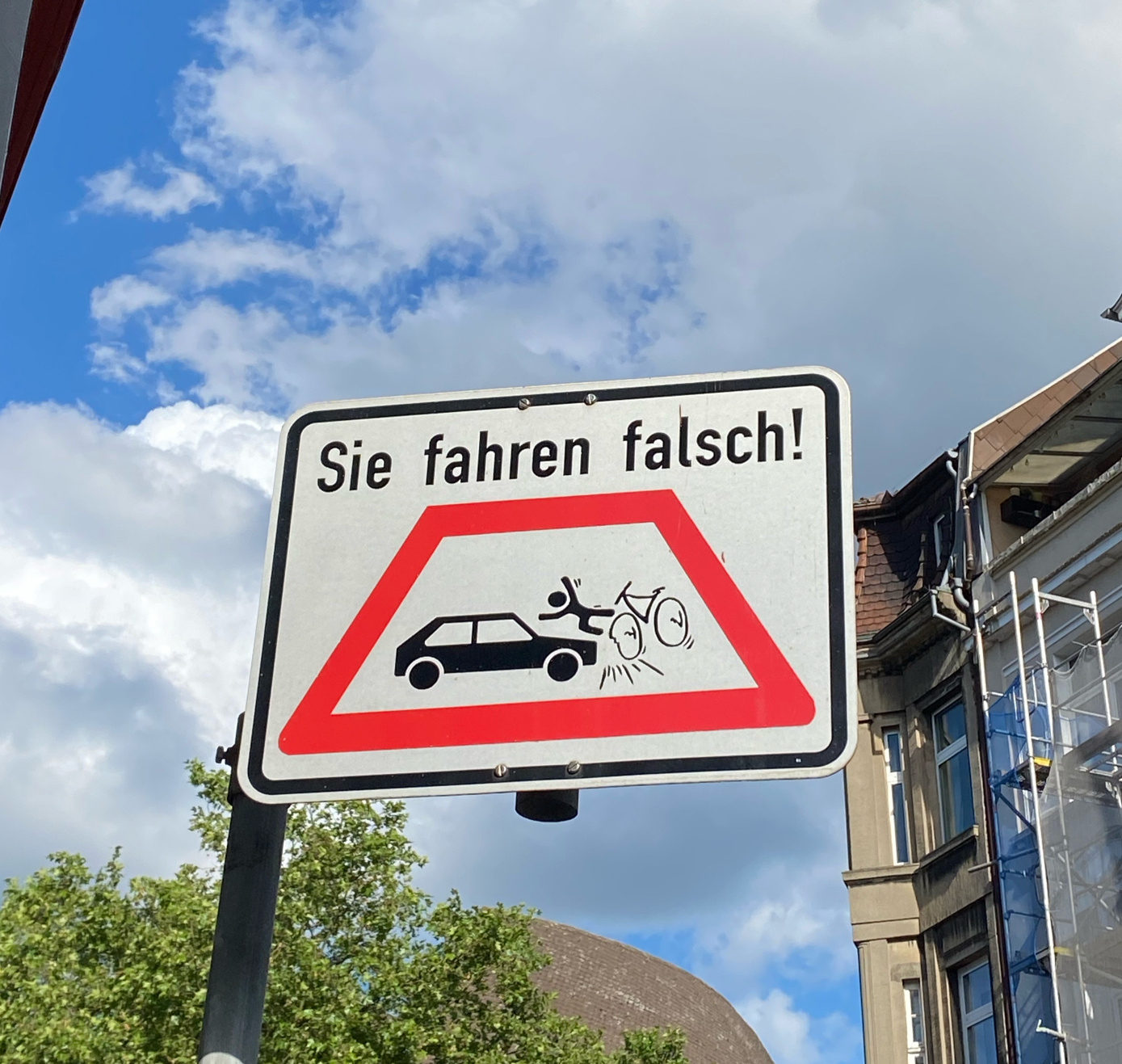
© Lingscape, ID 101400, https://lingscape-app.uni.lu, separately licensed under CC BY-NC-SA 4.0
First up is another digital platform – or, to put it more accurately, a digital map in the form of an app. Called Lingscape, it was developed at the University of Luxembourg by Christopher Purschke. As Purschke (2021) explains, the app invites users to photograph language in public spaces, upload the images and briefly describe what caught their eye. Whether these are signs, flags, graffiti or quirky AI adverts, the database already contains several thousand entries. The app, which has been active for 10 years, has played a decisive role in establishing the concept of linguistic landscaping in linguistic research. For instance, it was used in the Viennese project ‘VisibLL’, in which co-researches examined visible multilingualism in Vienna’s public spaces together with co-researchers. You can take a closer look at the Lingscape map here.
The ‚Sprach-Checker‘ project, initiated by the Leibniz Institute for the German Language (IDS) in Mannheim, took a different approach. This project ran from 2022 to 2025, taking the form of an analogue, regional, outreach-based initiative. The 'Sprach-Checker' ('Language Scouts') were children and young people from the Neckarstadt-West district of Mannheim.
© IDS
Together with IDS researchers, they investigated the language and languages of everyday life in their neighbourhood. In their report, the project initiators Roessel et al. (2024) describe how the young co-researchers acquired linguistic methods, planned their own research projects, collected data, conducted interviews and how they analysed them. The report also concludes that the added value of multilingualism for linguistic diversity had a decisive impact both in research outcomes and for the young researchers. The project has resulted in a number of outputs, including a children's book, ‘Der Wörter-Sammel-Koffer’ (The Word-Collecting Suitcase), and a short film, ‘Stimmen der Vielfalt’ (Voices of Diversity). Click here for more information about the project.
Both examples demonstrate the benefits of the participatory nature of citizen science for linguistics: With digital approaches such as Lingscape, participants can quickly and collectively provide data for research, whilst the Sprach-Checker project focuses on the contribution of individual language experiences from participating citizens. At Sprachschmiede, we aim to integrate both approaches to better understand linguistic creativity as a highly individual and diverse phenomenon.
Have we sparked your interest? If so, click here to see our current language projects and find out how you can get involved. Is there a topic that particularly interests you and that you would like to help research yourself? Let us know in the survey. Every contribution counts!
Comments